
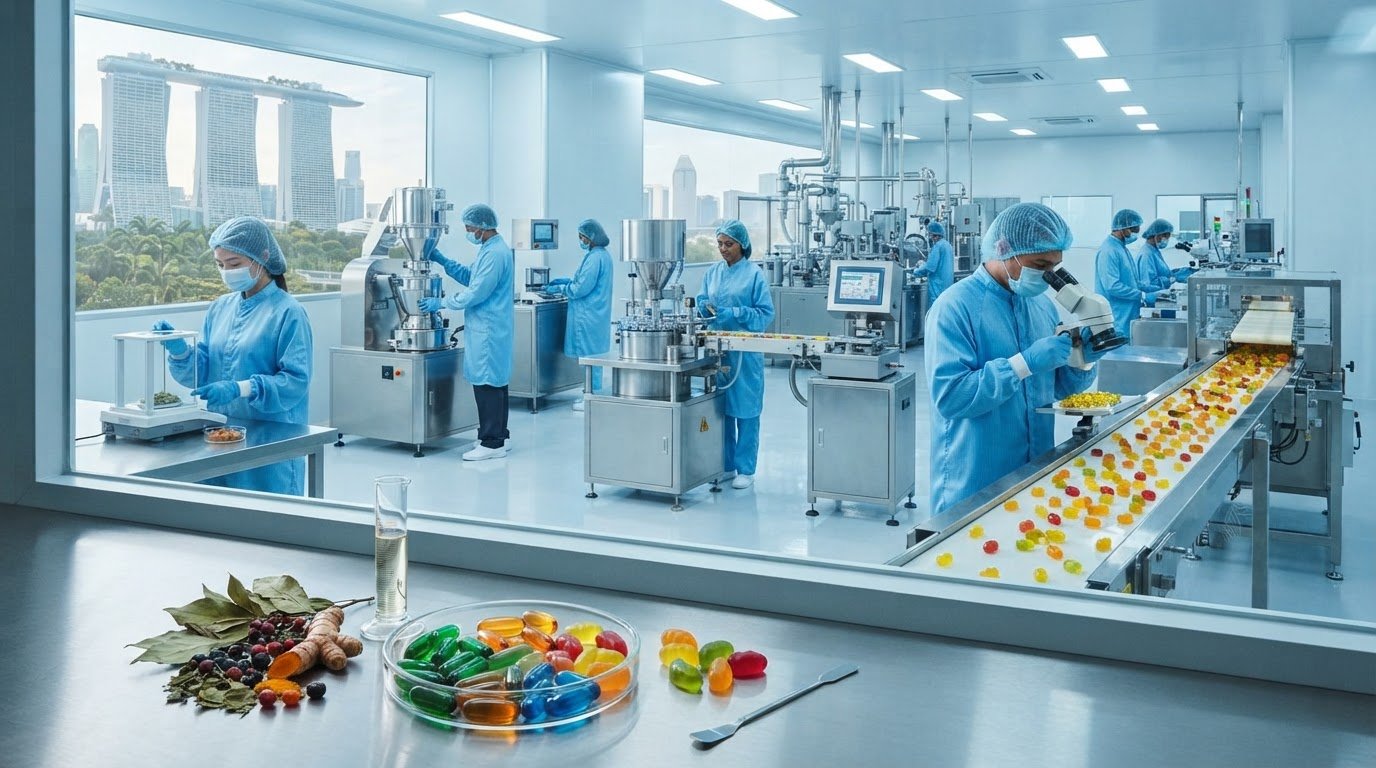
A supplement’s commercial readiness depends on more than its ingredient list. The formula, dosage form and production controls must work together. Supplement formulation and manufacturing typically moves from defining the product and developing its formula to producing a batch and preparing it for packaging and labelling. In Singapore, health supplements are not subject to HSA approval or licensing for importation, manufacture or sale, according to the Health Sciences Authority.
It makes sense to consider formulation costs and production choices early, since both affect how a product can be made and brought to market. This guide explains how bulk manufacturing works, which factors shape formulation costs, how good manufacturing practices support consistency, and how custom, modified-stock and private-label options differ. It also covers the main dosage forms and Singapore considerations that can inform a practical development plan.
Key Takeaways
- Formulation costs depend on the development route, ingredient requirements and dosage form, so define the product scope before budgeting.
- Ingredient sourcing and post-development quality controls help support product consistency from raw materials through finished batches.
- Good manufacturing practices rely on documented procedures and checks throughout production, not just a final inspection.
- Compare custom, modified-stock and private-label routes by the level of formula control and development work your brand needs.
- Harmony Pharma Lab supports OEM supplement production with low MOQ options, including Soft Capsule and Gummies, alongside Hard Capsule and Tablet formats.
What Is Bulk Supplement Manufacturing and How Does It Work?
Bulk manufacturing produces supplement batches before final packaging, labelling and branding. Capsules and tablets are solid dosage forms, powders are measured blends, gummies are chewable formats, and liquids are fluid preparations.
The production process links formula specifications to a tested batch, with controls at each stage. In Singapore, the Health Sciences Authority states that health supplements are not subject to HSA approval or licensing for importation, manufacture or sale.
Manufacturer Responsibility for Product Safety
Manufacturer responsibility means following documented procedures to control product quality from incoming ingredients through finished-batch release. This matters because a brand’s product depends on consistent ingredients, accurate processing and traceable records, not just a formula written on paper.
Written procedures should cover raw-material sourcing, production steps, testing and release. For example, a supplier’s certificate of analysis can inform incoming checks, while independent verification helps confirm ingredient identity and purity. Batch records also connect materials and process steps to the finished product.
Regulatory Compliance and Product Claims
Regulatory compliance means aligning the product, its label and its claims with the rules that apply in the intended market. This matters because the formula’s ingredients and dosage form must match how the product is described to consumers.
Claims should accurately reflect the product and its supporting information. In Singapore, brands need to consider applicable requirements for health supplements, including label details such as a batch number and expiry date. Review claims alongside the formula and label before production, so marketing language does not go beyond what the product can substantiate.
Scaling From Pilot to Full Production
Scale-up transfers a formula from a small pilot batch to commercial production while preserving its intended characteristics. This matters because larger equipment can affect blending, filling and batch uniformity, even when the ingredient list stays the same.
A pilot run is typically 5,000 to 25,000 units. Use the run to assess process flow, dosage consistency and practical production issues before committing to a larger batch. The first full production run typically takes 10 to 20 percent longer than later runs, as teams establish and document repeatable settings.
Production Timelines and Lead Times
Production timelines cover preparation, manufacturing, testing and release, while lead times describe the schedule from order to shipment. These matter for launch planning because formula complexity, packaging preparation and quality checks affect when finished goods are ready.
Private-label supplements typically take 4 to 8 weeks to ship. Custom batches can require longer planning because formula development and technical review come before production. Build time for testing into the schedule rather than treating it as an afterthought.
Quality control continues after production begins. Finished batches are tested for potency, microbial safety and consistency before compliant batches move forward. Stability testing assesses samples at 1, 3, 6, and 12 months; those results help support shelf-life decisions and identify changes that could affect product quality over time.
For brands, this sequence connects a product vision to commercial readiness: define the formula and claims, test a pilot, document production controls, then move into full-batch manufacturing. Each stage informs the next, reducing the risk of leaving scale, labelling or testing decisions too late.
How much does supplement formulation cost?
Formulation costs depend on ingredient complexity, testing needs, dosage form and development work. In Singapore, budgeting starts with product specifications and the level of technical support required.
Ingredient Selection and Formulation Strategy
Ingredient selection determines the formula’s purpose, dosage form and manufacturing requirements. Ingredient properties matter because they affect product stability, potency and practical production specifications.
Start with the intended benefit and target consumer, then assess each ingredient’s role and compatibility. For example, a formula built around several active ingredients may need more compatibility assessment than a simpler blend. Singapore compliance also shapes choices: according to the Health Sciences Authority, the maximum daily vitamin C limit for health supplements for Singapore’s general adult population is 1000 mg.
Ingredient Interactions and Excipient Selection
Ingredient interactions occur when components affect one another’s stability, absorption or safety. Excipient selection identifies the supporting materials needed to make a formula processable and consistent in its chosen dosage form.
These decisions matter because a combination that looks suitable on paper may behave differently in a finished product. A powder blend, for example, must combine active ingredients with suitable supporting materials while maintaining an even mixture. Scientific evaluation can identify interaction risks early, before they lead to reformulation, additional testing or changes to product specifications.
Purity, Potency, and Safety Testing
Ingredient testing assesses identity, purity, potency and safety against defined specifications. It matters because the formula relies on materials that match their stated characteristics before entering production.
Raw materials should come from approved suppliers and be verified before use. Supplier certificates of analysis provide information, while independent verification can confirm ingredient identity and purity. Testing plans may also account for microbial safety and finished-product consistency. These controls connect the ingredient specification to the intended amount of each active component.
Ingredient Sourcing and Post-Development Support
Ingredient sourcing involves selecting suppliers and materials that meet a formula’s quality and production requirements. Post-development support carries those decisions into production through sourcing continuity, quality records and ongoing checks.
This matters because a formula must remain workable after development, not just during initial sampling. If a material changes, its identity, potency and compatibility can affect the finished batch. Regular quality-control reports and third-party testing, where appropriate, help assess whether materials and finished products continue to meet specifications during production.
For budgeting, separate formulation work from ingredient procurement, testing and production requirements. The price depends on the case and is given after a quote request; key factors include the number and complexity of ingredients, dosage form, testing scope and required production specifications. A clear product brief helps define these needs before development begins. Brands planning an OEM project can review supplement manufacturing options as they refine their requirements.
Current good manufacturing practices
Good Manufacturing Practices (GMP) are documented controls that help keep supplement production consistent. They matter because a batch should match its defined identity, purity, quality, strength and composition. For a brand, GMP is more than a label attached to a facility. It is reflected in the procedures staff follow and the records they create throughout production.
GMP relies on written procedures for routine manufacturing decisions. These may cover receiving materials, preparing equipment, managing production steps and recording deviations. A documented process gives teams a consistent reference when different staff handle the same product. It also creates records that help trace a finished batch through its production history and support an investigation if a quality issue arises.
For example, a tablet batch record can identify the materials used, document processing steps and link the batch to its test results. If a variation appears, staff can review the records to locate where it occurred and assess its possible effect. Finished-product testing supports quality assurance, but does not replace controls during production.
GMP and Singapore Requirements
In Singapore, the Health Sciences Authority states that health supplements are not subject to HSA approval or licensing for importation, manufacture or sale. This statement does not itself define a manufacturer’s GMP procedures. Brands should distinguish this market-specific regulatory position from the operational controls used to produce consistent supplements.
GMP practices can be assessed through procedures and records for the product being made. Relevant documentation may include material checks, process records, test results and batch-release decisions. HACCP is also a quality certification consideration for supplement manufacturing. These frameworks and records serve different purposes, so a certificate alone does not fully describe how each batch is controlled.
Apply GMP as a connected system. Before production, establish the approved formula and material specifications. During production, follow the documented process and record deviations. Before release, review completed records and relevant test results against acceptance criteria. This sequence links manufacturing practices to the supplement’s stated quality attributes and provides traceability for later review.
For a brand, the difference lies between having written practices and following them consistently. A tablet procedure has practical value when staff use it, document the work and address deviations. Clear records help teams compare batches, investigate variations and make release decisions using the same criteria. They also give commercial partners a clearer view of the controls behind the finished product.

Custom supplement formulation and research and development
Custom development turns a product concept into a formula designed for its intended use, audience and dosage form. It connects nutrition goals with ingredient compatibility, production specifications and market requirements.
The Formulation Development Process
Formulation development translates a product brief into a technically workable supplement formula. It matters because the desired benefit must align with ingredient properties, dosage form and manufacturing requirements.
The process starts with the target consumer and product purpose, then defines ingredient roles and amounts. A powder, for example, must combine materials in a blend that can be processed consistently. The formula is then assessed for compatibility, stability and suitability for its intended form. This technical review gives the development team a basis for refining the specification before production.
Development commonly takes 3 to 6 months for a custom supplement. The duration reflects formulation complexity, ingredient sourcing, testing and the number of design revisions. Clear specifications at the outset help focus development on the product’s essential characteristics.
Formulation Costs and Development Timelines
Development expenditure reflects the work needed to create, assess and prepare a formula for production. It matters because a multi-ingredient formula may require more technical assessment than a straightforward blend.
Key cost drivers include ingredient complexity, sourcing requirements, dosage form, prototype work and testing scope. Timelines also depend on whether materials are readily available and whether the formula needs adjustment after technical evaluation. A custom project typically takes 3 to 6 months, while development overall can range from a few weeks to several months.
Budget planning should separate formulation work from later production and testing requirements. For example, a powder with several interacting ingredients may need more development attention than a formula with a simpler composition. Defining the target benefit and essential specifications early helps keep development decisions aligned with the product brief.
Prototype Samples and Revisions
Prototype samples are trial versions used to assess a proposed formula before manufacturing. They matter because a sample lets the team evaluate practical attributes and identify adjustments before approving the final specification.
Formulation teams commonly produce two to three rounds of prototype samples, with two to four weeks budgeted per round. Each round can assess factors such as blend characteristics, flavour and suitability for the chosen dosage form. Feedback should identify the specific attribute to change, keeping revisions tied to the intended product instead of expanding the brief without a clear reason.
After a revision, the updated sample needs another technical review. For instance, changing an ingredient may affect compatibility, stability or the formula’s balance. Record the approved composition and specifications so the production version matches the development decision.
Claims should also align with the formula’s intended purpose and supporting information. Clear, accurate language helps prevent misleading descriptions, while the final formula and product specifications provide a defined reference for subsequent production.
Custom, private-label, and modified stock formula options
Formula routes differ in the degree of control a brand has over ingredients, development and packaging. The right choice depends on the product target, timeline and required level of differentiation.
How the Formula Routes Differ
Custom formulation develops a formula around a brand’s specific product objectives. It offers greater control over ingredients and specifications, but requires development work before production. This route suits brands whose concept cannot be met by an existing formula.
Private-label manufacturing uses a pre-formulated product and generally offers shorter lead times than contract manufacturing. Modified stock sits between these routes: an existing formula is adjusted to suit the brand’s requirements. A modified stock formula typically takes 6 to 12 weeks to develop, offering some tailoring without beginning from scratch.
Compare the options by the changes required. A familiar vitamin blend with standard specifications may suit a private-label route. A distinct ingredient combination or product profile may call for a modified-stock or custom formula. Formula flexibility, development work and testing needs all influence the decision.
Packaging, Labelling, and Distribution
Packaging choices affect how a supplement is filled, stored and presented to consumers. Common formats include bottles, jars, bags, sticks or sachets, and boxes. For example, a powder may be packed in a bag or sachet, while capsules may go in a bottle.
Match packaging to the dosage form, product quantity and distribution plan. The package must accommodate the product and leave space for its label. Storage and distribution arrangements should suit the finished product and its packaging, since powders, capsules and liquids have different physical forms and handling needs.
In Singapore, health supplement labels must include a batch number and an expiry date. These details support product identification and date tracking. Keep the approved label aligned with the finished formula, so ingredient information and product descriptions match what is packed.
Label Information for Singapore
Prepare label information for the Singapore market and keep it consistent with the product’s formula and intended use. A clear product description, ingredient information and serving directions help consumers understand what the supplement contains and how it is presented.
Review the wording and packaging together before production. For example, a change to the ingredient composition may require corresponding label updates. Include the batch number and expiry date on the finished pack, and ensure the information remains legible on the chosen packaging format.
Set the target formula, packaging format and intended market before selecting a route. Discuss supplement formula options for a product concept that needs a defined dosage form and production plan.
Harmony Pharma Lab: Soft Capsule
Harmony Pharma Lab is an OEM supplement manufacturer in Singapore for brands planning production in a defined dosage form. Its offerings include Soft Capsule, Gummies, Hard Capsule and Tablet, with low MOQ options supporting a more accessible production start.
Brands considering a soft capsule or gummy format can work with Singapore’s first Soft Capsule facility and first Gummies facility, respectively. These options suit concepts that call for either format, while Hard Capsule and Tablet offer additional choices for brands matching dosage form to formula and target market.
To discuss your supplement production requirements, contact Harmony Pharma Lab.
Shape Your Next Product Development Decision
The next step is to turn your product concept into a clear commercial brief. Define the intended audience, desired dosage form, target market and key product requirements, then use these priorities to guide development discussions. This gives each decision, from formula direction to production planning, a practical reference point.
For brands assessing a suitable format, Harmony Pharma Lab offers Soft Capsule, Gummies and Hard Capsule manufacturing. Aligning the dosage form with the product concept can help create a focused path from development to production. A clear brief also makes it easier to discuss which specifications matter most for your project.
Every product begins with a set of choices. With a defined direction, supplement formulation and manufacturing can progress through purposeful decisions rather than disconnected adjustments. Share your requirements with Harmony Pharma Lab to discuss moving your product concept toward production.
Contact Harmony Pharma Lab to begin the conversation and take the next step with confidence.
Frequently Asked Questions
What are the main steps in supplement formulation and manufacturing?
The process moves from a product brief to a formula, production plan and finished batch. First, define the intended consumer, product purpose and dosage form. Next, assess ingredients, serving specifications and market requirements. Development and sample review refine the formula before production. After manufacture, review quality records and label information against the approved product. Treat each stage as a decision point: unresolved formula or label changes can affect later work.
How do you choose ingredients and determine dosages for a supplement formulation?
Choose ingredients according to the product’s intended purpose, target consumer, evidence and compatibility. Set dosage by assessing each ingredient’s intended amount per serving, the final serving format and applicable market limits. In Singapore, requirements can vary by ingredient and intended population, so the formula needs a market-specific review. For combinations, consider total intake across the serving rather than assessing each ingredient in isolation, and document the rationale for the selected specifications.
What are the minimum order quantities and manufacturing costs for supplements in Singapore?
Minimum order quantities and project costs depend on dosage form, batch requirements and production scope. Harmony Pharma Lab offers low MOQ options, while the applicable quantity and quote depend on the specific project. Cost factors can include formula complexity, ingredient sourcing, testing, packaging and production requirements. Request a project quote in Singapore dollars, S$, with the intended format and product specifications clearly defined so the estimate reflects the planned work.
How do you find and evaluate a supplement contract manufacturer in Singapore?
Evaluate whether the manufacturer’s production scope matches your product concept, dosage form and target market. Harmony Pharma Lab is a B2B OEM partner producing supplement formats including Soft Capsule, Gummies, Hard Capsule, Tablet, Powder and Liquid. For a practical assessment, prepare a brief covering ingredients, serving specifications, packaging direction and destination market. Then compare the proposed development and production scope with that brief, including how documentation and quality checks fit the project.
What quality standards and certifications should supplement manufacturers meet, such as GMP and HACCP?
Assess the manufacturer’s documented quality practices and their relevance to your destination market. GMP describes manufacturing controls; HACCP is another quality consideration for supplement production. Neither name alone explains how a specific batch is controlled, so review the procedures and records that apply to your product. In Singapore, the Health Sciences Authority states that health supplements are not subject to HSA approval or licensing for importation, manufacture or sale. Requirements differ in other markets.
What testing is needed for supplement safety, potency, contaminants, and shelf life?
Testing should reflect the formula, ingredient risks, product specifications and intended shelf life. A testing plan can distinguish incoming-material checks from finished-product assessments, using independent laboratory testing where appropriate. For a multi-ingredient product, align test selection with the specific ingredients and potential contaminants rather than assuming one panel suits every formula. Stability studies assess changes over time and help support shelf-life decisions; retain results with the relevant batch and specification records.
How long does supplement product development and manufacturing take?
Timing depends on whether the project uses an existing formula or needs custom development, as well as sourcing, sample revisions, testing and production scheduling. Separate formula development from manufacturing and release when planning a launch: an approved sample does not mean finished stock is ready. A project calendar should identify dependencies, such as ingredient availability before batch production and label approval before packaging. Changes to materials or specifications can also affect the sequence.
What are common formulation and manufacturing risks, including ingredient stability and supply-chain issues?
Common risks include ingredient interactions, changes in material properties and supplier availability. For example, replacing an ingredient may alter the formula’s compatibility or require fresh assessment against the product specification. Stability can also be affected by the ingredient combination and chosen dosage form. Build change control into the project: record material substitutions, assess their effect on the formula, and update relevant testing and production documents before using revised materials.