A clean-label brief is only as reliable as the ingredient and production decisions behind it. An allergen-free, organic, naturally flavoured or naturally sweetened blend starts with clear requirements for ingredients and manufacturing controls, which a supplement powder manufacturer can use to guide formulation. In Singapore, health supplements do not require HSA approval or licensing for import, manufacture, or sale, according to the Health Sciences Authority; the authority also requires health-supplement dealers to meet applicable safety and quality requirements and maintain supporting information for ingredient safety and product compliance.
Those distinctions matter: a desired claim needs to become practical specifications for the formula and its production, not just a label choice. This guide explains how custom powder blends are developed, what to consider when assessing allergen-free, organic, flavour and sweetener requirements, and how manufacturing, quality documentation and shipping fit into the process. You’ll also see how private-label production can support a supplement brand from formulation through commercial readiness.
Key Takeaways
- Translate your target audience and product concept into clear ingredient, flavour, texture, and blend requirements before development begins.
- Understand how private-label production can connect formulation decisions with manufacturing and the needs of your supplement brand.
- Map the production process from blending and filling through packaging and shipping to plan a smoother path to market.
- Assess manufacturers by how their quality processes, documentation, and production capabilities align with your product requirements.
Uses in nutraceuticals, supplements, herbal and wellness products
Powder formats suit products that consumers measure, mix or add to drinks and foods. Examples include protein shakes, powdered botanical extracts, meal supplements and wellness drink mixes. A nutraceutical blend may combine active ingredients with flavourings and other formulation components, while a herbal product may centre on a specified plant extract. Intended use guides ingredient selection, serving format, flavour profile and the product information needed for development.
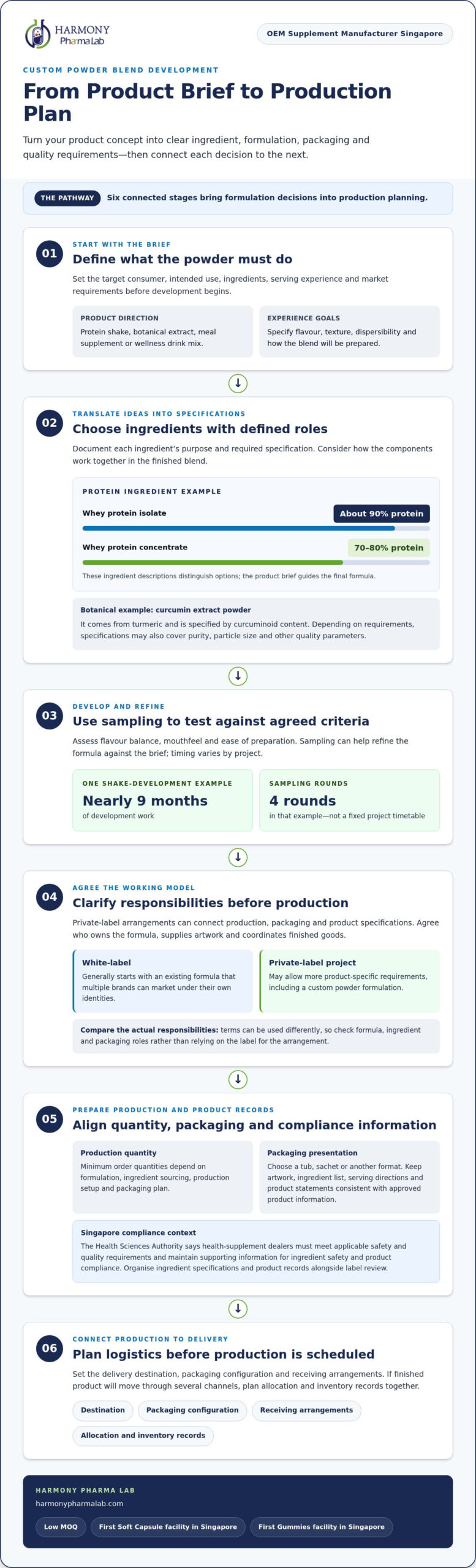
Formulation starts with a product brief: define the target consumer, ingredients, serving experience and market requirements. For a protein powder, that can mean selecting a whey type and setting the blend’s flavour and mixability goals. Whey protein isolate is described as about 90% protein, while whey protein concentrate is described as comprising 70-80% protein. These figures help distinguish ingredient options, but the final formula depends on the product brief.
Botanical products need equally precise ingredient specifications. Curcumin extract powder comes from turmeric and is specified according to its curcuminoid content. Depending on product requirements, specifications may also cover purity, particle size and other quality parameters. For a custom blend, document each ingredient’s intended role and required specification, then assess how the components work together in the finished powder.
Development also addresses practical characteristics, including taste, texture, dispersibility and how ingredients behave during blending. One shake-development example involved nearly nine months of work and four sampling rounds. This illustrates how iterative sampling can refine a formula against a defined brief, not a fixed timetable for every project. Each round should assess agreed criteria, such as flavour balance, mouthfeel and ease of preparation.
Minimum order quantities affect how a powder concept moves into production. The required batch size depends on the formulation, ingredient sourcing, production setup and packaging plan, so brands should align these factors before settling on a launch quantity. A supplement powder manufacturer can discuss how the formula and production plan fit together, while development teams turn product requirements into a workable specification.
Powder is one of several formats used for supplements. Capsules, tablets, gummies and liquids offer different serving experiences and production considerations, so choose the format based on intended use rather than habit. In Singapore, the Health Sciences Authority says health-supplement dealers must meet applicable safety and quality requirements and maintain supporting information on ingredient safety and product compliance. Organised specifications and product records help connect formulation decisions with these responsibilities.
Why to Choose Private Label Supplement Manufacturers?
Private-label production lets a brand bring nutritional products to market without building its own manufacturing operation. The right arrangement depends on how much control you need over the formula, packaging and production process.
Private-Label Manufacturing Options
A contract manufacturer produces supplements for a brand, with responsibilities defined by the project. Private-label work may include production, packaging and coordination around product specifications. Before selecting a model, map out who owns the formula, who supplies packaging artwork and how finished goods move through the agreed process. These decisions shape the working relationship and each party’s role.
White-Label Manufacturing
White-label arrangements generally start with an existing formula that multiple brands can market under their own identities. Private-label projects may allow a brand to set more product-specific requirements, including a custom powder formulation. Since businesses use these terms differently, compare the actual formula, ingredient and packaging responsibilities rather than relying on the label for the arrangement.
For a nutritional powder, customisation can cover the ingredient profile, flavour direction, serving format and packaging presentation. A product brief should state which elements are fixed and which may change during development. A contract manufacturer can then assess how those requirements fit production planning. Clear specifications also distinguish a tailored product from a standard formula sold under a different brand identity.
Packaging belongs in the product plan, not just the final design stage. Decide whether the product will use a tub, sachet or another format, then align the artwork with the chosen package. Keep the ingredient list, serving directions and product statements consistent with the approved product information. A defined review process helps prevent changes to the formula, label and packaging from becoming disconnected.
Assign clear responsibility for registration and compliance documentation. In Singapore, the Health Sciences Authority says health-supplement dealers are responsible for applicable safety and quality requirements, along with supporting information on ingredient safety and product compliance. Organise ingredient specifications and product records alongside the label review so the commercial presentation accurately reflects the product.
Logistics planning connects production to launch. Establish the delivery destination, packaging configuration and receiving arrangements before production is scheduled. For example, a brand distributing through several channels may need a coordinated plan for finished-product allocation and inventory records. A powder production discussion can help connect the formulation brief with packaging and delivery requirements. Explore custom powder manufacturing as a next step when defining that production scope.
Contract manufacturing services from formulation to shipping
A contract manufacturing project connects product development with production, packaging and delivery planning. Define responsibilities at each stage to keep the product brief aligned with the finished goods.
Custom Formulation and Research
Custom formulation turns a brand’s product brief into a workable recipe and production specification. Research and development can assess ingredient compatibility, intended use, taste, texture and preparation method. For example, a plant-based drink mix may need a different flavour approach from a protein shake. Give the manufacturing partner clear priorities, then use sample feedback to refine the formula against those requirements.
Assess raw materials against the formula and its intended claims. Define an allergen-free requirement precisely, including relevant ingredients and handling considerations. A plant-based brief also needs clear criteria for ingredient origin and product composition. If organic inputs matter, include that preference in the sourcing specification and align it with the product’s documentation needs. These details help identify suitable materials and address trade-offs early.
Custom Formula Development
Custom development may start with a blank brief or adapt an existing concept. A brand with an established nutritional product can provide its target ingredient profile and sensory direction. A new product may start with consumer use, serving format and market positioning. In both cases, document which formula attributes are essential and which can change during sampling, then assess each proposed adjustment against the original product objective.
Ready-made and custom formulas meet different development needs. A ready-made formula offers a defined starting point, while a custom formula gives the brand more input into its ingredient profile and product characteristics. Compare the actual scope, including raw-material selection, flavour development and packaging requirements. A powder intended for a smoothie, for example, has different use expectations from one designed to dissolve in water.
Before production, the agreed specification should connect the formula with batch instructions, packaging details and product information. The brand and contract partner can align responsibilities for reviewing ingredient records, label content and artwork. For products sold in Singapore, the Health Sciences Authority says health-supplement dealers must meet applicable safety and quality requirements and maintain supporting information on ingredient safety and product compliance.
Shipping preparation starts with practical details: destination, delivery format, receiving arrangements and allocation of finished goods. These decisions affect how production output is packed and dispatched. A brand supplying more than one sales channel can plan separate inventory allocations before goods leave the facility. Include these logistics in the project workflow to connect formulation and manufacturing decisions with the product’s route to market.
GMP certifications, licenses and regulatory registrations
In Singapore, health supplements do not require HSA approval or licensing for import, manufacture or sale, according to the Health Sciences Authority. Singapore brands can work with local or overseas manufacturers. Compare each production site, its documented controls and the product records supporting compliance.
Manufacturing Location and Certifications
Start by identifying the actual site that will make the product, rather than relying on a company’s registered office or sales location. Then compare the site’s certifications with the product format and manufacturing activities in scope. For example, powder blending and capsule production involve different process steps, so site information should clearly match the assigned work.
Check the certificate’s issuing body, scope, site name and validity details. A certification informs your assessment only when it covers the relevant facility and activities. Keep it alongside the manufacturer’s specifications and quality records for the ingredients and finished product.
Supplement Manufacturing Credentials
Manufacturing credentials help clarify which quality systems and activities a facility has documented. Review how procedures cover ingredient receipt, production records, batch identification, deviations and finished-product release. These records make it easier to trace a specific batch and connect its ingredients with the relevant production documentation.
Distinguish facility credentials from product approval or registration. The Health Sciences Authority states that health supplements do not require its approval or licensing for import, manufacture or sale in Singapore. Dealers still need to maintain applicable safety and quality controls, so assess how the manufacturer’s records support your product information and responsibilities.
Food Safety Certifications
Food safety certifications can describe a site’s food-safety management arrangements, but their scope matters. Compare the named site, covered operations and certified activities with the manufacturing work under consideration. For example, a certificate covering one facility is not evidence of production at another location.
Use a structured review: match site details, certification scope and product specifications, then organise the records with the ingredient documentation. This makes gaps between the intended formula and production site easier to identify. For ingredients used in powders or capsules, keep specifications connected to the product’s safety and quality file.
Under Singapore’s framework, dealers must ensure health supplements meet applicable safety and quality requirements and maintain supporting information on ingredient safety and product compliance, according to the Health Sciences Authority. A manufacturer’s certificates support due diligence, while the brand’s product records should accurately reflect its ingredients, specifications and manufacturing arrangements.
Choosing a supplement manufacturer
Compare manufacturers against the work your dietary supplement requires, not broad capability statements. A useful assessment connects your product brief, production process, quality records and delivery plan. For example, a powder brand can review ingredient specifications, blending requirements, packaging format and batch documentation in one project discussion.
Start with the fit between the formula and production process. Discuss how the proposed process handles your ingredients, target texture, flavour profile and packaging format. A blend containing several raw materials may need different handling from a single-ingredient powder. A manufacturer’s explanation of how its facilities and production steps fit your specifications is more informative than a broad claim of being the highest-quality provider.
Assess quality controls through concrete records. Review how ingredient identity, batch traceability, production deviations and finished-product release are documented. A useful discussion follows one batch from incoming materials to packed goods and identifies the records connecting each stage. Check that product specifications align with the intended formula and that documentation supports your Singapore-market product information.
Compare project responsibilities before production begins. Set out who manages formulation changes, packaging artwork, label review, production scheduling and shipping coordination. For example, if a flavour adjustment changes the ingredient list, establish how the updated specification reaches the label and production records. Clear ownership reduces mismatches between the approved product brief and goods prepared for distribution.
Overseas manufacturers can add coordination risks, including longer communication loops, different working hours and more complex shipment planning. Distance can also make it harder to align sample reviews, production updates and document revisions in real time. Manage these risks by documenting responsibilities, decision points, file versions and delivery arrangements before production.
Use a structured comparison rather than relying on a single credential or sales presentation. Discuss the following points with each company:
- Product fit: Does the proposed process address your ingredients and finished-product specifications?
- Records: Can the team explain how batch documents connect materials, production and release?
- Project ownership: Are formula, label, packaging and shipping responsibilities clearly assigned?
- Communication: Is there a defined method for approvals, revisions and production updates?
For international supply, connect the selected manufacturing location with your delivery destination and receiving process. Confirm that product files, shipment details and inventory allocation stay aligned as the project moves from production to dispatch. Discuss your powder manufacturing requirements as you assess the fit between a custom brief and production planning.
Harmony Pharma Lab: Soft Capsule
Harmony Pharma Lab supports supplement brands with OEM manufacturing for custom products, including soft capsules. Its low-MOQ approach can suit brands developing a product before expanding production. The company also offers gummies, hard capsules and tablets, giving brands format options for different product concepts.
For Singapore-based projects, Harmony Pharma Lab has the first Soft Capsule facility in Singapore and the first Gummies facility in Singapore. These formats may suit brands whose product brief calls for a capsule or gummy rather than a powder. Align the intended format with the product concept, ingredient requirements and target consumer experience.
When your manufacturing requirements are defined, visit harmonypharmalab.com to discuss your project with Harmony Pharma Lab.
Turn Your Product Brief Into a Clear Next Step
A promising supplement concept is easier to advance when its priorities are ranked. Identify the product attributes that must remain fixed, the decisions still open to development and the information your team needs before approving production. This gives internal stakeholders a practical basis for reviewing proposals and helps keep development aligned with commercial objectives.
Selecting a supplement powder manufacturer is one part of the planning process. Use your brief to frame a focused discussion about how the intended product will move from concept to production and how decisions will be documented along the way. A well-defined scope helps your team assess the partnership against its actual requirements, rather than broad capability statements.
When you’re ready to discuss your project and manufacturing needs, contact Harmony Pharma Lab. A considered first conversation can help you shape the next steps with clarity and confidence.
Frequently Asked Questions
Can you make allergen free, organic, natural flavoured & sweetened powder?
Custom powder development can account for allergen exclusions, organic ingredient preferences, and natural flavour or sweetener requirements. State each requirement in the product brief, then translate it into ingredient specifications and product information. For example, identify the allergens to exclude and the flavour profile you want. This gives formulation decisions a clear basis and keeps ingredient selection aligned with the product’s intended positioning.
How quickly can you manufacture my products?
Production timing depends on the formula, sampling and approval process, ingredient sourcing, packaging decisions and production scheduling. A new blend requiring flavour refinement follows a different path from a formula with settled specifications and packaging. Plan around the decisions that must be completed before manufacturing starts, including approval of the formula and label artwork. This creates a project-specific schedule without relying on a generic turnaround estimate.
Need Wholesale Rates?
Manufacturing pricing depends on the project and is provided after a quote request. Relevant factors include the formulation, ingredient selection, production requirements, packaging format and order quantity. For a useful quotation, prepare the product brief and intended packaging details, and identify any custom development requirements. This defines the work being priced and makes the quotation relevant to your project rather than a general wholesale rate.
What is the MOQ for Powder?
The minimum order quantity for powder depends on the project’s formula, raw-material sourcing, production setup and packaging requirements. A blend with several ingredients may need different production planning from a simpler formula. For a new launch, align the batch quantity with expected demand and the packaging plan. This connects the order decision to inventory needs while keeping the product specification and manufacturing process in view.
How do I choose a supplement powder contract manufacturer?
Choose a partner whose process and records suit your formula, specifications and supply plan. A supplement powder manufacturer should be able to explain how a batch moves from ingredient receipt through production and release. Discuss how formula revisions are recorded, how ingredient documentation is organised and how packaging details connect with the finished product. Review a sample project workflow to assess whether responsibilities and approvals are clear before production begins.
What is the minimum order quantity for supplement powder manufacturing?
There isn’t one universal quantity for supplement powder production; it depends on the formula, ingredient procurement, manufacturing setup and selected packaging. Harmony Pharma Lab offers low MOQ, while the project quantity is shaped by its production requirements. For a limited initial launch, for example, account for both the production batch and the number of units required by the chosen packaging.
How much does it cost to manufacture supplement powder in Singapore?
The cost depends on the project and is provided after a quote request. Key factors include whether the formula is custom or established, its ingredients, development work, production requirements and packaging format. For a Singapore project, prepare a brief describing the target product and intended packaging so the quotation reflects the actual scope. No general market figure can accurately represent every formulation and production plan.
What certifications should a supplement powder manufacturer have?
Assess credentials by checking the manufacturing site, the activities covered and the documentation relevant to your product. A certificate should correspond to the facility doing the work, while batch and ingredient records should support traceability. In Singapore, health supplements do not require HSA approval or licensing for import, manufacture or sale, according to the Health Sciences Authority. Dealers remain responsible for applicable safety and quality requirements.